
Introduction
The retail and hospitality ecosystems in India are undergoing unprecedented transformation. Consumer expectations have evolved dramatically, and businesses are no longer defined solely by the products they sell, but by how efficiently they deliver their services. Behind this evolution stands a strong enabler — the Point-of-Sale (POS) system.
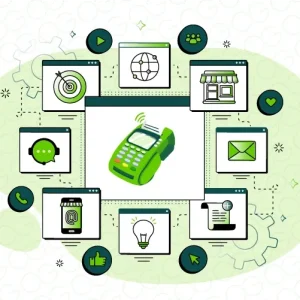
The POS, once considered just a billing counter utility, has now become the operational command center of modern businesses. It not only manages daily sales but also integrates payments, customer analytics, staff performance, stock management, and multi-store synchronization.
As India firms its position as one of the fastest-growing digital economies in the world, POS systems have matured to offer new abilities. Today, POS solutions are becoming smarter, more connected, and more mobile. Businesses are adopting cloud-based platforms, automation technologies, AI-driven analytics, and handheld mobility to enhance the customer experience and fuel sustainable growth.
In 2025, the POS industry in India is not just growing — it is redefining how businesses operate. From grocery shops to QSR chains, boutique stores to fashion retail, pharmacies to cafés, everyone is embracing newer, sharper tools. These trends are not mere upgrades, but foundational shifts reshaping how products are sold, how customers interact, and how insights guide business decisions.
This blog explores the biggest POS trends shaping India’s retail and restaurant landscape in 2025. We will understand how cloud platforms are streamlining control, how mobile POS is accelerating service, how automation is reducing error and increasing profitability, and how data intelligence is becoming the core of business strategy.
The Rise of Cloud-Based POS as the New Standard
Perhaps the most defining shift in India’s POS landscape is the widespread adoption of cloud-based systems. Traditional POS — where data was stored locally on a desktop or terminal — made sense for small outlets. But as businesses expanded, the need for centralized control became apparent.
Cloud POS addressed these challenges brilliantly. By storing data on secure servers, it allowed business owners to access real-time updates from anywhere. Whether they ran two outlets or two hundred, they could now monitor sales, view inventory updates, track bestseller products, and analyze branch-wise performance instantly.
This shift is particularly beneficial for QSR and retail chains. Chains like KFC, Domino’s, or large supermarket formats thrive on consistency. Whether someone orders a pizza in Bengaluru or Mysuru, the billing structure, item options, and system response should feel the same. Cloud POS allows organizations to centrally update menus, revise prices, impose discounts, and manage staff access — across every store simultaneously.
Another reason cloud POS has become prominent is continuity. Hardware failure no longer means catastrophic data loss. Cloud-based systems back up data automatically and frequently. Even if an outlet device stops working, operations can resume on another terminal seamlessly.
As internet access becomes ubiquitous — even in semi-urban areas — cloud POS adoption will only accelerate. For new businesses in 2025, cloud-based POS is not just an option — it is becoming the default.
Mobility: POS Is Breaking Free from the Counter
Until recently, billing activity was physically anchored to the counter. Staff would wait for customers to bring products or menu selections to the billing terminal. But mobility is changing that paradigm entirely.
Mobile POS solutions — through smartphones, tablets, or handheld terminals — are now empowering businesses to take service directly to the customer. Restaurants can accept orders table-side, enabling faster dining experiences. Retail stores can bill customers on the floor, reducing queue congestion. Food trucks rely on mobile POS to run entirely without traditional infrastructure.
In large-format stores, mobile POS can turn staff into roaming checkout agents. Customers no longer wait in line; billing comes to them. Similarly, at restaurants, mobile POS eliminates back-and-forth movement by servers, resulting in faster order placement and improved kitchen coordination.
This new mobility also aligns with India’s cultural shift toward convenience. When every second counts, businesses cannot afford to make customers wait. Handheld POS devices compress the entire checkout process into a simple, portable interface that brings immense flexibility.
In remote or temporary business setups — exhibitions, pop-ups, weekend markets — mobile POS becomes the ideal solution. No physical counter is required; everything is handled from a pocket-sized device.
The mobility trend is supported by reliable wireless connectivity, compact hardware, and cloud synchronization. Collectively, they create a service experience that feels effortless and personalized.
Automation: Eliminating Manual Effort & Reducing Human Error
As Indian businesses embrace digital transformation, automation has emerged as a central pillar in POS evolution. Traditionally, retail and restaurant operations were filled with repetitive tasks — manual inventory counting, handwritten orders, manual GST calculations, and delayed data entry. These tasks are not only time-consuming but also prone to human error. In 2025, automation is gradually replacing these inefficiencies with precision, speed, and transparency.
With POS automation, each sale automatically updates inventory, stock discrepancies are flagged instantly, re-ordering triggers are generated without intervention, and GST invoices are printed within seconds. This reduces operational stress and helps maintain real-time accuracy. For businesses that stock hundreds or thousands of SKUs — such as supermarkets, pharmacies or fashion outlets — automated stock tracking prevents shortages, reduces pilferage, and protects margins.
Restaurants benefit immensely from KOT (Kitchen Order Ticket) automation. Instead of verbal or handwritten instructions, POS systems send digital orders directly to kitchen display screens or printers. Every dish, customization request, and portion detail is captured clearly, reducing miscommunication and food wastage. Automation also improves service rhythm — the kitchen moves systematically, ensuring quicker ticket times and consistent food quality.
Even in customer management, automation plays a key role. Loyalty points, discount eligibility, and personalized offers are tracked automatically. Businesses no longer need to track these benefits manually — every visit updates customer data, enabling smarter campaigns in the future.
This silent engine of automation allows business owners to step away from micromanagement. Instead of spending hours reconciling data, they focus on innovation, growth, and customer relationships. When done right, automation becomes more than an efficiency tool — it becomes a competitive advantage.
Integration: The Power of Working Together
One of the most powerful POS trends in 2025 is the shift toward integrated systems. Modern businesses run on multiple tools — payment platforms, online delivery apps, accounting systems, inventory modules, and loyalty programs. Managing these tools separately leads to confusion, duplication, and frustration. Integration solves this elegantly.
A modern POS acts like a central brain that communicates with all other business systems. If a customer places an online food order through Zomato or Swiggy, the POS immediately receives and processes it. The order enters the kitchen workflow, inventory is adjusted, customer data is recorded, and revenue reports update automatically. This eliminates the need for manual entry, reducing error and saving time.
Similarly, POS systems now integrate with UPI, credit card networks, and payment gateways. Regardless of how customers pay — via PhonePe, Google Pay, Paytm, NFC gestures, or cards — the transaction syncs seamlessly. This reduces billing delays and avoids mismatched records during reconciliation.
Accounting software integration is another massive advantage. Instead of accountants manually entering daily sales into their tools, POS syncs revenue, tax, discount, and transaction data automatically. This saves enormous time and creates clarity during compliance, GST filing, and audits.
The true power of integration lies in unification — multiple tools working together harmoniously under the POS umbrella. It ensures nothing is missed, every record is synchronized, and data flows across the business with minimal friction. In 2025, seamless integration has moved from being a premium feature to an essential expectation.
Analytics & Insights: POS as a Business Intelligence Engine
We often hear that “data is the new oil,” but raw data alone holds limited value. What matters is the ability to interpret that data and turn it into meaningful decisions. This is where modern POS analytics rise to prominence.
Every action within a business generates data — which products sell the most, which time windows are busiest, which menu items deliver the highest margin, which locations outperform, how frequently customers return, and so much more. POS systems collect all this information and transform it into structured insights.
In 2025, POS systems are increasingly becoming business intelligence platforms. Owners can instantly view daily, weekly, and monthly sales trends. They can see what products are fast-moving or stagnant. Restaurants can discover which dishes drive the highest revenue. Retailers can compare outlet performance and adjust supply accordingly.
This visibility helps business owners make proactive decisions. If a particular dish is underperforming over time, it may be replaced or re-priced. If a certain product category performs exceptionally in one city, the business might promote it more aggressively in another.
Analytics also helps forecast demand — a vital function for inventory-heavy businesses. Instead of guessing how much stock to purchase, owners can use historical data and seasonal trends to plan appropriately. This prevents both overstocking (leading to wastage) and under-stocking (leading to lost sales).
POS analytics offer clarity, and clarity creates confidence. Every decision becomes more strategic, less emotional. In a competitive market, where margins are thin and customer attention fluctuates rapidly, informed decisions can define success.
Digital Payments & POS — A Stronger Relationship
India’s rapid shift to cashless payments is one of the fastest transformations in global financial history. UPI usage has skyrocketed, creating an economic environment where customers expect instant, seamless digital transactions everywhere — from large showrooms to food trucks.
In 2025, POS systems are deeply integrated with digital payment processors. Whether a customer uses PhonePe, Google Pay, Paytm, or any wallet, the payment syncs with POS instantly. There is no need for manual entry, reducing mismatches and reconciliation hassles.
The POS displays QR codes and supports tap-to-pay cards. Customers feel empowered to pay however they choose, reducing friction. Businesses also benefit from this integration — fewer cash-handling errors, faster checkout, and clearer financial records.
Digital payments also feed into customer analytics. Purchase history linked with digital identity enables businesses to understand customer preferences better. This encourages smarter promotions and deeper loyalty.
The relationship between POS and digital payments has become inseparable. Together, they deliver a payment experience that is fast, accurate, and convenient — a winning combination for both customer satisfaction and operational efficiency.
Personalization: POS as a Customer Understanding Tool
In modern commerce, success depends not only on how many customers a business attracts, but on how well it understands and retains them. India’s retail and hospitality sectors have begun embracing personalization as a way to deepen customer relationships, and the POS system is emerging as the bridge between business and customer intelligence.
Every time a customer visits, the POS records what they bought, how much they spent, and how often they return. Over time, this information grows into powerful behavioral insights. Businesses can identify their most loyal customers, understand their favorite products, and offer tailored incentives. When a customer feels seen and valued, loyalty strengthens naturally.
Imagine a café that greets a regular customer by name, remembers their preferred coffee choice, and offers a birthday discount—this level of attention feels special. A supermarket can notify frequent buyers when their favorite products go on sale. Restaurants can send invites to loyal customers for special tasting events. These touchpoints, powered by POS insights, create meaningful emotional connections.
Personalization also helps businesses maximize marketing efficiency. Instead of broadcasting generic offers, the POS enables precise targeting. Customers receive promotions that match their interests, making them more likely to respond. Not only does this increase sales, but it reduces wasted marketing expense. In 2025, personalization isn’t just an added advantage—it’s becoming the new expectation.
Security & Compliance: POS Safeguarding Data & Reputation
As POS systems grow increasingly connected through cloud networks, integration platforms, and digital payments, security becomes central to their value. Business data is an asset—sales, customer records, payment histories, and inventory logs—must be protected. A security breach isn’t just a technical issue; it can damage reputation and erode customer trust.
In 2025, modern POS platforms in India are adopting advanced security layers, including encrypted databases, role-based access, and secure cloud storage. This protects data even if hardware fails or is stolen. Only authorized users access sensitive features like discounts, refunds, or financial reports. Business owners can assign roles—cashier, manager, admin—and restrict access accordingly.
Compliance is also driving POS adoption. With GST continuing to shape India’s tax framework, businesses must maintain accurate financial records. A POS system ensures correct GST calculation, generates compliant invoices, and supports audit-friendly reporting. During tax seasons, instead of scrambling through spreadsheets and paper receipts, businesses can produce organized reports with a few clicks.
Ultimately, secure and compliant POS systems protect both revenue and reputation. In a world where data privacy and transparency matter more than ever, the safest businesses will earn the greatest trust.
The Expansion of Multi-Outlet Management
India is witnessing fast expansion in organized retail and restaurant chains. Whether it’s clothing stores, supermarkets, QSR brands, cafés, or pharmacies—businesses are scaling across cities. As outlets multiply, management becomes increasingly complex. Owners must standardize pricing, maintain inventory across locations, track revenue, and monitor performance. Without a centralized system, expansion creates chaos.
Modern POS solutions solve this challenge through unified multi-outlet management. With cloud synchronization, every transaction across every store is recorded in real time. Owners can monitor all outlets from a single dashboard—whether they’re in the same city or hundreds of kilometers away.
Administrators can update menu items, change prices, modify taxes, or add seasonal offers across all stores instantly. There’s no need to update each outlet manually. This uniformity reinforces brand consistency—vital for chains that stand on standard experiences, like KFC or Domino’s.
Inventory coordination becomes effortless. If one outlet is low on a fast-moving product, owners can transfer stock from another location with surplus. Performance analytics help determine which branches are thriving and which need support. Best practices can spread quickly while problem areas receive attention.
With such structure, businesses can scale rapidly without losing control. Multi-outlet POS management is no longer a luxury—it is a must for any brand aspiring to grow.
Handheld Terminals: The New Heart of Speed
Handheld POS devices are redefining how businesses serve customers. Sleek and mobile, these devices support billing, scanning, and digital payments in a compact form. Their biggest advantage is flexibility—they bring the counter to the customer.
In retail stores, staff can complete billing directly at the aisle. Customers don’t need to wait in traditional queues. For restaurants, handheld devices enable tableside ordering. Servers can capture orders instantly, send them to the kitchen, and accept payment when customers finish dining. This enhances table turnover and improves customer satisfaction.
Food delivery models also see benefits—delivery executives equipped with handheld POS systems can collect digital payments and issue receipts instantly. Pop-up stalls, event kiosks, and food trucks rely heavily on these devices since they require minimal space and setup.
Handheld POS systems demonstrate a broader shift—billing is no longer tied to a stationary system. Mobility is becoming an essential business enabler.
The Influence of AI & Predictive Insights
Artificial Intelligence is gradually weaving its way into POS systems, transforming them from reactive tools to proactive decision-makers. AI-driven POS platforms can forecast trends, recognize purchase patterns, and even recommend actions.
For example, a POS might suggest reordering stock of a product that historically sells out at month-end. Or it might flag an unusual price fluctuation that needs attention. Restaurants may receive automated reminders when ingredient consumption increases unexpectedly. AI can also detect potential theft or misbilling by monitoring irregular transaction patterns.
Predictive insights guide smarter inventory management. Instead of stocking blindly, businesses can align purchases with demand. This reduces wastage, particularly important in restaurants where raw ingredients expire. AI also helps optimize pricing strategies—dynamic pricing models can adjust costs based on demand, seasons, or competitor trends.
Customer service improves, too. AI-based loyalty models predict which customers are likely to return and what offers might influence them. Businesses can tailor promotions precisely, improving marketing ROI.
These early steps signal the deeper future of AI in POS—where technology doesn’t just record transactions, but guides business decisions.
The Growth of Self-Checkout & Customer-Driven Billing
Customer behavior across India is evolving rapidly. As people grow more comfortable with digital payments and online ordering, self-service models are gaining momentum. Although still at an early stage compared to Western countries, India is beginning to witness the gradual rise of self-checkout systems, especially in supermarkets, electronics stores, and transit hubs.
Self-checkout POS allows customers to scan items themselves, review totals on a display, and complete payment without relying on a cashier. This saves time, reduces queues, and provides customers a sense of independence. For stores, it means improved staff productivity, faster checkout throughput, and lower labor load during peak hours.
The adoption of self-checkout aligns with the rise of digital confidence. People who routinely purchase online, book tickets digitally, and transfer money via UPI prefer automated experiences. With self-checkout, POS becomes a customer tool rather than just a cashier tool.
Even in restaurants, particularly QSR chains, self-ordering kiosks are emerging. Customers browse menus on screens, customize dishes, place orders, and pay directly. The kitchen receives orders instantly, and customers wait for their order number. This model reduces dependency on counter staff and enhances order accuracy. It also encourages upselling — screens can display suggested add-ons, combos, or trending dishes.
While India is still developing this model, the momentum is building. Over time, as costs reduce and consumer preference shifts further toward autonomy, self-checkout POS may become standard practice — especially in large-format retail environments.
Omnichannel Fulfillment & Unified Commerce
A modern business can no longer limit itself to one sales channel. Customers shop everywhere — physical stores, online platforms, mobile apps, WhatsApp storefronts, social commerce, and delivery apps. With such diversity, maintaining a consistent business identity becomes challenging.
This is where omnichannel POS plays a crucial role. Instead of managing separate systems for offline and online sales, businesses use POS to unify orders, inventory, and customer data across every platform. The multi-channel environment merges into a single, seamless ecosystem.
Consider a clothing store that sells both in-store and online. Without omnichannel POS, inventory becomes fragmented. A product sold online might still appear available in the physical outlet, causing confusion. Conversely, POS synchronizes stock across platforms instantly. If an item sells out online, the physical store updates automatically, and vice-versa.
For restaurants, POS centralizes dine-in, takeaway, and delivery orders. Regardless of whether an order comes from Zomato, Swiggy, or walk-ins, everything flows into one system. This helps avoid overbooking or stock issues during rush hours.
The benefit?
A unified experience for both the business and the customer. Customers receive consistent pricing, messaging, and service across every channel, reinforcing trust and brand reliability. Businesses save time, improve efficiency, and gain powerful visibility over their operations — from a single panel.
Omnichannel POS is a reflection of how modern commerce truly works. Customers don’t think in channels; they only think about convenience. Unified POS platforms allow businesses to deliver that convenience smoothly.
The Indian Edge: Local Adaptation & Regional Flexibility
India is a diverse market — economically, culturally, and technologically. A POS trend in Bengaluru may differ from a trend in Patna or Jaipur. Payment preferences, inventory patterns, language needs, taxation levels, and customer behavior vary widely across regions. The strongest POS systems in 2025 are the ones adapting to this diversity.
Regional support is emerging as a major differentiator. POS providers now include multilingual interfaces, accommodating staff who may be more comfortable in local languages. Menus and product catalogs can be localized easily, helping small businesses adopt digital operations without language barriers.
Local taxation compliance differs across states and industries. POS systems are now better aligned with India’s GST framework, helping businesses generate compliant invoices and reports irrespective of region. In 2025, POS solutions must be flexible enough to respect local rules while maintaining national control.
Support availability is another key factor. India’s rapid digitalization has created demand for technicians who can install, troubleshoot, and maintain POS systems across cities and towns. Businesses prefer providers who have strong local networks capable of quick support. On-site and remote integration has become crucial.
India also values affordability. POS systems that offer modular pricing and low-cost hardware compatibility are preferred. Businesses want something that integrates well, performs consistently, and remains within budget. The most successful POS solutions in India are those that blend global innovation with local understanding.
Network Reliability & Offline Continuity
While India has made tremendous progress in internet penetration, connectivity fluctuations still happen, especially outside large metros. This makes network adaptability an essential feature of POS systems.
The best POS platforms now offer hybrid models — where billing works offline and syncs when the network returns. This ensures that operations never halt due to connectivity issues. A café in a hill town, a supermarket in a dense market area, or a pop-up store at an event can continue selling without worrying about internet dropouts.
Offline mode maintains local data storage temporarily. When the connection restores, the system automatically syncs with the cloud, updating inventory, sales logs, and customer records. This hybrid approach ensures continuity while retaining the benefits of cloud access.
Hybrid flexibility also means fewer transaction delays, better customer service, and uninterrupted sales. In a country as dynamic as India, offline capability isn’t just a supporting feature — it is a necessity.
The Growing Importance of After-Sales Support
No matter how advanced a POS system may be, its true value is measured by the support behind it. Businesses operate non-stop — early mornings, late nights, weekends, festive rushes — and when something goes wrong, the response time becomes critical.
A billing halt equals sales loss. Slow support equals frustrated customers. Proactive support equals business continuity.
In 2025, POS success is defined not only by smart software, but by reliable service ecosystems — on-site technicians, fast remote troubleshooting, hardware replacement readiness, and preventive maintenance. Businesses now expect partners who can solve issues quickly, not just sell systems.
Companies like OneSphere Enterprises have built their value around such reliability — offering installation, setup, consumables, periodic inspection, and rapid breakdown support. When businesses feel confident that help is always near, they operate with less anxiety and better focus.
Support has quietly become the biggest differentiator in India’s POS market — and it will remain so for years to come.
POS as the Central Nervous System of Modern Commerce
To truly understand the importance of emerging POS trends, it is helpful to see the system not merely as a billing tool, but as the central nervous system of a modern business. Every action—from inventory intake and customer ordering to payment processing and performance reporting—flows through the POS.
This interconnection is why innovation within POS technology creates deep transformation throughout the business. When a POS becomes cloud-enabled, business visibility expands. When mobility enters, service speeds up. When automation integrates, errors disappear. When AI emerges, decisions get sharper.
Just like the human nervous system, the POS coordinates every internal function and relays information to the brain—the business owner—who makes decisions based on real-time data. These decisions improve accuracy, increase agility, and accelerate growth.
In the coming years, POS systems will deepen their connection with external tools—CRM platforms, supplier networks, accounting systems, loyalty engines, delivery apps, and predictive engines—turning them into complete operating platforms for commerce.
SMEs & The Democratization of Technology
One of the most significant shifts in India’s POS evolution is accessibility. In the past, only large chains could afford advanced systems. Today, solutions are increasingly available to small and medium-sized businesses (SMEs) at affordable prices.
This democratization of technology is reshaping India’s business landscape. Even small family-run restaurants, bakeries, salons, and grocery stores now use POS solutions that rival technology used by global brands. This creates a level playing field, enabling small businesses to compete with larger operations more effectively.
As price barriers continue to fall and cloud deployment becomes simpler, POS systems will penetrate deeper — into Tier-2, Tier-3, and emerging markets. This adoption will empower local businesses with tools to manage stock, understand customer behavior, and grow sustainably.
This shift will redefine the Indian marketplace — where every business, regardless of size, can operate with intelligence and professionalism.
Sustainability & Paperless Direction
As digital adoption expands, sustainability is emerging as an important consideration. Customers today are more conscious about waste, especially in urban hubs. POS systems are adapting accordingly by supporting e-receipts via SMS, WhatsApp, and email. This not only reduces paper usage but enhances customer convenience.
Electronic documentation also improves long-term accessibility. Instead of needing physical receipts for returns or warranty management, customers can retrieve digital copies anytime. This approach eliminates yet another inefficiency of traditional systems.
For businesses embracing sustainability as part of their identity, POS e-documentation becomes a powerful branding layer — blending technology with environmental responsibility.
Customer-Centric Commerce Becomes the New Norm
The most profound POS trend of 2025 is philosophical rather than technological: commerce is becoming customer-centric. Every innovation—from mobile billing and AI analytics to omnichannel unification and self-checkout—is ultimately about serving the customer better.
Customers want speed.
They want accuracy.
They want choice.
They want personalization.
They want convenience.
A POS system, when designed well, quietly fulfills every one of these desires. It orchestrates a smooth journey, ensuring customers leave satisfied and eager to return.
Businesses that understand this shift will prosper. Those that adopt technology but ignore customer-centricity will fall behind. In retail and hospitality, the winners will always be those who keep the customer at the heart of their strategy.
Conclusion — POS Trends Defining India’s Retail & Hospitality Future
The POS landscape in India is no longer static. It is dynamic, progressive, and layered with innovation. From cloud-based platforms to mobile-first solutions, from automation and AI to self-service kiosks and omnichannel commerce, transformation is continuous.
These trends are not isolated upgrades; they are shaping the very foundation of how businesses function and evolve.
Cloud POS is unlocking remote visibility and central control.
Mobility is breaking the billing counter barrier.
Automation is eliminating repetitive effort and error.
Omnichannel systems are unifying sales streams.
Analytics is empowering decision-making.
Self-checkout is redefining customer independence.
AI is shaping predictive performance.
Support is protecting continuity.
Together, they represent a new era in which the POS is no longer confined to transaction processing — it is the strategic center of business intelligence and customer experience.
In a marketplace where competition is fierce and consumer expectations grow daily, businesses cannot afford to rely on outdated tools. The future belongs to those who leverage POS advancements to operate swiftly, intelligently, and empathetically.
Whether it’s a boutique clothing store, a neighborhood grocery outlet, a bustling café, or a global QSR chain, the POS trends of 2025 offer a roadmap toward tomorrow’s commerce — smarter, faster, and more customer-focused than ever before.
And as India continues to embrace digital transformation, the POS will remain the leading technology guiding it — shaping businesses, connecting customers, and redefining modern retail and hospitality for years to come.